
The Passion Myth: Why Following Random Interests Leads to Deeper Learning
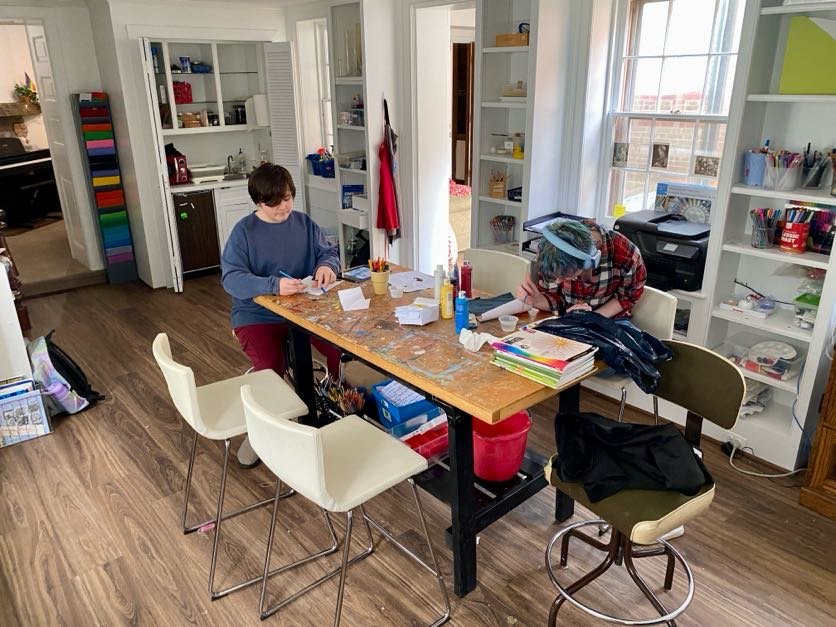
Does your child seem to bounce between interests without settling on "the one"? Does it look like they're not "learning anything" or preparing for real life? Are you convinced they could never be left to their own devices because they would "just play video games or sleep all day"? You're not alone - and you might be missing the point.
The parental anxiety is real: "My kid isn't learning anything... how will they ever be prepared for real life if they aren't compelled to do stuff?"
We're told that self-directed education could never work for our kids because they would languish without structure and requirements. But what if the reality is the opposite?
The Reality vs. The Myth
The reality is that when learning comes from genuine curiosity rather than compliance, it goes deeper, lasts longer, and builds exactly the skills besides academic knowledge that matter most for future success like adaptability, persistence, and the ability to learn anything.
The myth is that structure creates learning; the truth is that curiosity does.
Research consistently demonstrates that intrinsic motivation leads to significantly better learning outcomes. According to Self-Determination Theory, when students are intrinsically motivated, they engage more deeply with learning materials, leading to enhanced academic performance and more positive learning attitudes.
The Breadcrumb Effect: How Random Moments Create Lifelong Paths
What are learning breadcrumbs?
They're those small, seemingly insignificant moments of interest that, when followed, lead to bigger discoveries. They don't follow a predictable path. Rather they meander, connect, and sometimes surprise us.
Case Study 1: The Minecraft Architect
"Emma" spent what seemed like endless hours building complex structures in Minecraft. Her parents worried about the "wasted screen time," but what she was actually developing was advanced spatial reasoning through three-dimensional problem-solving, collaborative problem-solving through multiplayer building projects, and creative problem-solving by finding unconventional solutions to in-game challenges.
These skills might later help her excel in architectural design, engineering projects, medical diagnostics, urban planning, or even something completely unrelated like furniture making or event planning. The spatial thinking transfers naturally across many fields.
Real-World Applications:
Architecture and design careers
Engineering fields and technical analysis
Medical imaging and diagnostics
Urban planning and community development
Project management and logistics coordination
The same skills that help her design an elaborate Minecraft castle could someday help her understand how to organize a community garden or plan a family vacation.
Case Study 2: The YouTube Explorer
"Shane" fell into what looked like an endless rabbit hole of YouTube channels. One week he was watching chemistry explanations, the next it was political commentaries, then cooking tutorials, and finally animal behavior videos. His parents wondered if he was "just wasting time."
But what he was developing was analytical thinking by connecting ideas across topics, critical evaluation skills by questioning different content creators' perspectives, and knowledge synthesis by creating mental frameworks of complex subjects.
Real-World Applications:
Research careers and academic analysis
Media production and content creation
Investigative journalism and fact-checking
Data analysis and business intelligence
Policy development and strategic planning
Innovation and cross-disciplinary problem solving
These skills might lead him to countless fields where connecting disparate information matters - from scientific research to business strategy to community organizing.
Case Study 3: The Boredom Breakthrough
Sometimes the most meaningful development comes from what seems like the most unproductive time - pure boredom. One of our alumni, "Marcus," spent years deeply engaged in gaming with friends. After graduating, he found himself at home with limited social interaction and feeling isolated. For months, his days felt repetitive and unfulfilling.
His parents tried to suggest activities, but nothing stuck. Then, finally, Marcus got tired of his own inertia. On his own terms, he decided to try college to broaden his horizons. The difference was dramatic, not because college was inherently better, but because the choice came from within. He was motivated to engage, to connect, to learn, and he's now thriving in ways that would never have been possible if his parents had pushed him earlier.
The Power of Boredom:
Boredom creates space for authentic self-reflection
It eventually pushes us toward meaningful change - but only when we're ready
The teen who "can't decide" on activities might be in the middle of this important developmental process
Learning patience and self-discovery through uncertainty builds resilience
This illustrates why rushing kids through exploration phases often backfires. Sometimes the most profound development happens when we have the space to get tired of our own inertia and make authentic choices.
Why the "Find Your Passion" Pressure Backfires
The Forced Passion Trap
The forced passion trap is real when parents push kids toward "productive" interests. We've all seen the soccer parent who pressures their child to become an athlete, the coding parent who tries to turn every interest into a tech career, the academic parent who worries about every moment not spent studying.
How Pressure Kills Intrinsic Motivation
The difference between exploration and expectation is crucial. When learning comes from curiosity, it sticks. When it comes from compliance, it fades.
Research has shown that when people are rewarded for activities they already enjoy, their intrinsic motivation can decrease significantly. This is why pushing kids toward "productive" interests often kills the very curiosity that would lead to genuine passion.
The Research on Passion Development
The research actually shows that passion often emerges from competence, not the other way around. We develop skills through authentic engagement, and as we get better, we naturally become more passionate. The pressure to "find your passion" early often kills the very curiosity that would lead to genuine passion later.
Psychologist Carol Dweck's research on growth mindset shows that when students focus on skill development rather than passion discovery, they develop greater resilience and adaptability. The process of getting good at something creates the passion, not the other way around.
The Embark Center Difference
At Embark Center, we create space for organic interest development. We don't force pathways or pressure kids into predetermined futures. We trust that when given time and support, young people will find their own way.
What Parents Can Do Instead
Embrace the "Messy Middle"
Those exploration phases are valuable, not wasteful. The time your child spends "just playing" or "just watching videos" or "just being bored" is actually building important foundations for future learning.
Think About: What might your child's current "random" interest be building? What skills could they be developing that you don't even notice?
Ask Curiosity Questions, Not Passion Questions
"Anything interesting happen today?" opens up possibilities, while "What's your passion?" creates pressure. Focus on the moment-to-moment engagement rather than the long-term destination.
Better questions to ask:
"What fascinated you most today?"
"What surprised you about something you were exploring?"
"What would you like to learn more about?"
Notice and Nurture Genuine Engagement
Instead of creating checklists that might be weaponized, simply observe when your child lights up talking about something and show interest in what excites them. When they naturally share their discoveries without being prompted, that's a sign they're genuinely engaged.
Trust the Process
Self-directed learning often takes longer than we'd like, but it goes deeper. The skills developed through authentic interest last a lifetime.
The Intrinsic Motivation Advantage
Deeper Learning
When learning comes from curiosity rather than compliance, engagement and retention improve significantly. Research shows that intrinsically motivated students demonstrate strong conceptual learning, improved memory, and high overall achievement in school. Kids who choose what to learn engage more deeply and retain more information.
Persistence Through Challenges
When challenges arise, kids who are following their own interests are more likely to persist through difficulties. Studies show that intrinsic motivation is the strongest predictor of long-term persistence, far outweighing talent or external rewards. Intrinsically motivated individuals tend to be more persistent and demonstrate greater accomplishment in their academic endeavors.
Authentic Identity Development
Interests discovered organically become part of who we are in ways that externally imposed interests never can. This authentic identity formation is crucial for mental health and life satisfaction.
Future-Ready Skills
The skills that matter most for future success, like adaptability, critical thinking, problem-solving, and the ability to learn anything, all emerge from genuine interest. Research consistently highlights that intrinsic motivation fuels student engagement, which in turn leads to higher academic achievement and the development of complex competencies that transfer to professional life.
Freedom to Explore, Freedom to Become
The gift we can give our children is time; the time to explore, to be bored, to change their minds, and to discover what truly fascinates them. At Embark Center, we create that space every day.
Your role as a parent isn't to be the director of their learning journey, but the observer and supporter. Notice the breadcrumbs, trust the process, and celebrate the messy, beautiful path of authentic growth.
Common Questions Parents Ask
Q: But won't my child fall behind academically?
A: Self-directed students often outperform their peers in long-term learning outcomes. When they choose to learn, they engage more deeply and retain information better.
Q: How do I know if they're learning the right things?
A: The "right" things are the ones that build skills that transfer across all areas of life - critical thinking, problem-solving, creativity, and persistence.
Q: What if they never find their passion?
A: Passion isn't something you find - it's something that emerges from getting good at things you genuinely enjoy. The process of exploration itself builds the foundation for future passion.
Q: Isn't this just letting kids do whatever they want?
A: It's not about doing whatever they want. It's about following genuine curiosity within a supportive environment that provides structure, resources, and guidance when needed.
The Promise We Make
Students who learn to follow their curiosity become lifelong learners who can adapt, innovate, and find meaning in whatever path they choose. They develop the resilience and skills needed to thrive in a rapidly changing world.
