
Why Self-Directed Education Is So Valuable for Neurodivergent Kids (Including Those With a PDA Profile)
Key Idea
Neurodivergent kids—especially those with a PDA profile—often react strongly to pressure, expectations, or environments that don’t honor autonomy. But this isn’t fragility; it’s nervous-system honesty. Self-Directed Education (SDE) provides the safety, flexibility, and consent-based relationships kids need to regulate, engage, and grow. And the most important truth: what neurodivergent kids need for survival is what all humans need for well-being.
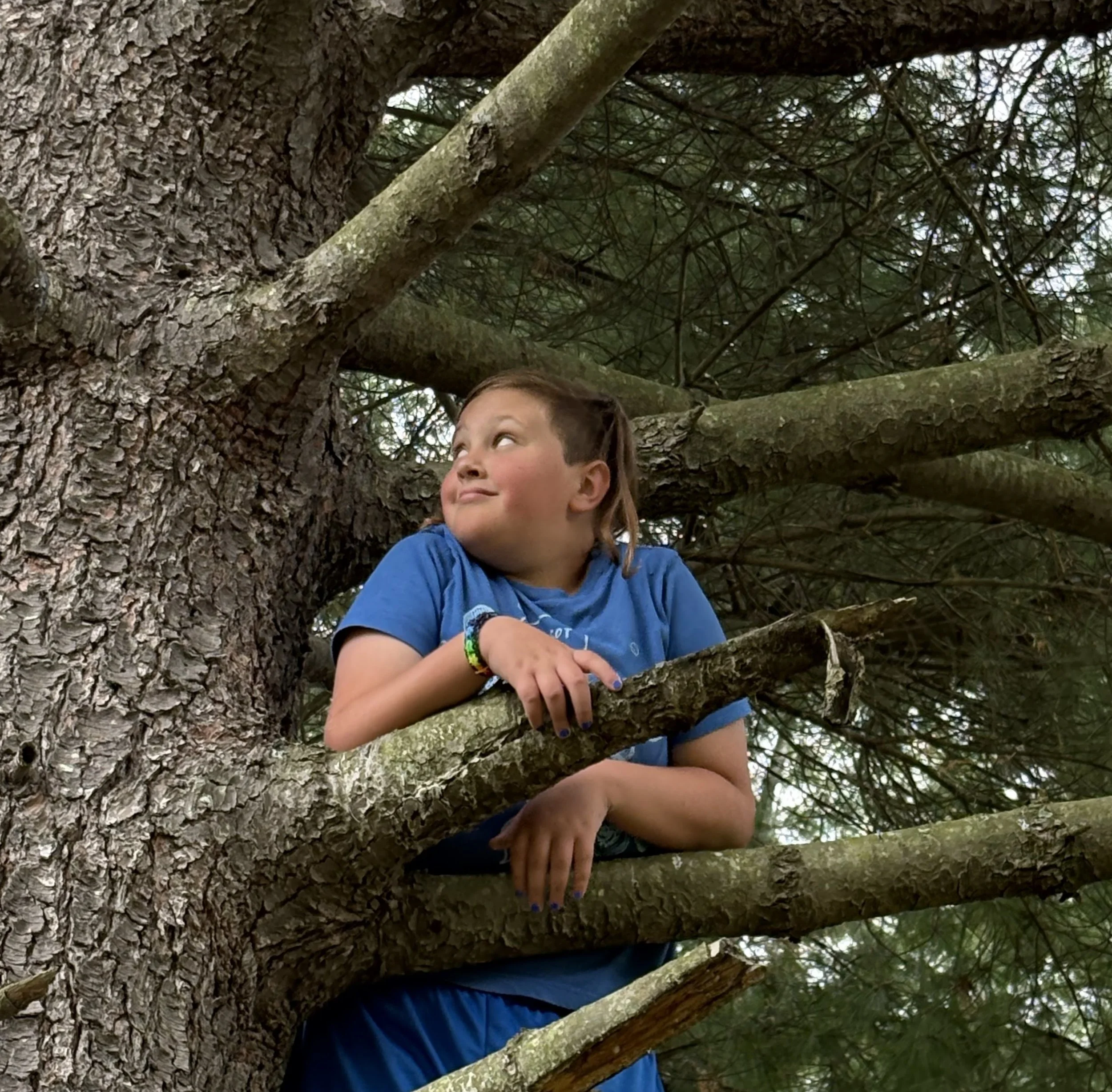
What supports this child’s well-being supports all children—autonomy, safety, and space to be themselves.
Learning can only happen when a child feels safe enough to stay open, curious, and connected. For many neurodivergent kids, traditional expectations and structures activate a defensive state: fight, flight, freeze, or fawn. A system built on compliance, pacing, and constant evaluation often pushes their nervous systems into survival mode. And no one—child or adult—can think, reason, or learn well from that state.
Kids with a Pathological Demand Avoidance (PDA) profile experience this even more intensely. Everyday requests can feel like threats. Even positive pressure can activate fear or avoidance. (PDA North America)
But here’s the crucial truth:
SDE doesn’t “fix” these kids. It creates a world where their biology is finally allowed to breathe.
Autonomy Is Regulation
For many neurodivergent children—autistic, ADHD, PDA, sensory-sensitive, traumatized—autonomy isn’t just a preference. It’s a regulator.
Traditional settings revolve around demands:
Start now
Stop now
Sit still
Transition immediately
Complete this because you’re told
Perform for evaluation
These expectations create a constant background noise of pressure that often overwhelms neurodivergent nervous systems. Their energy goes into enduring, not learning. Deb Dana’s work in Polyvagal Theory explains this physiological shift clearly: safety must come before engagement.SDE changes the entire context.
The default becomes:
“What makes sense for you?”
This is deeply aligned with research in Autonomy-Supportive Education which consistently shows that autonomy increases motivation, curiosity, and resilience for all humans—not just ND ones.
When kids choose:
what to do
how to do it
when to do it
who to do it with
whether to do it at all
their bodies stop bracing. The nervous system downshifts out of survival and into social engagement and curiosity — the state where real learning takes place.
Consent-Based Learning Reduces Masking and Exhaustion
Neurodivergent kids often feel pressure to mask: to act “fine,” hide discomfort, perform compliance, or mimic peers. Masking is exhausting and often harmful. Kieran Rose’s writing on The Autistic Advocate describes masking as both an adaptive survival strategy and a source of trauma.
In consent-based environments, kids can:
say no without fear
communicate needs honestly
stim, move, or pause whenever they need
be messy, authentic, emotionally complex
opt out and re-enter on their own timeline
This reduces the constant cognitive load of appearing okay.
When kids don’t have to spend all their energy surviving, they can spend it on:
exploring
connecting
creating
problem-solving
building skills
recovering
What looks like “avoidance” in a demand-heavy environment often transforms into engagement when consent and choice are restored.
Interest-Led Learning Works With Brain Wiring
Neurodivergent motivation is often rooted in:
interest
relevance
internal meaning
curiosity
deep focus or hyperfocus
authentic purpose
SDE aligns with these natural pathways.
Kids don’t learn because they’re told to; they learn because they’re drawn to something.
A child can develop:
math skills through crafting, gaming, or budgeting
literacy through roleplay, storytelling, or online communication
executive function through planning projects or events
social skills through chosen friendships, collaborations, or shared interests
This isn’t “avoiding academics”—it’s redefining academics to be human, purposeful, and brain-aligned.
Regulation Creates the Conditions for Growth
There’s a common fear that autonomy means kids will avoid anything hard. But the opposite is true.
When kids feel regulated and respected, they naturally begin to:
negotiate
tolerate frustration
try unfamiliar things
compromise
manage conflicts
practice flexibility
take emotional and intellectual risks
This is foundational trauma-informed practice—explained well through resources at Trauma-Sensitive Schools.
What adults call “resilience” grows from felt safety, not from pressure.
PDA kids in particular may surprise adults: something they refused yesterday becomes something they initiate today—simply because the demand energy isn’t there anymore.
Regulation → Trust → Curiosity → Challenge → Resilience.
That’s the sequence. It works every time.
Partnership Instead of Control
A defining feature of SDE is the relationship between kids and adults. Instead of a power hierarchy, there is partnership.
Partnership looks like:
co-creating plans
negotiating boundaries
repairing when adults make mistakes
offering support instead of imposing it
validating internal experiences
adjusting approaches as kids grow and change
modeling lifelong learning, humility, and reflection
This approach honors the reality that no child fits neatly into diagnostic categories. Brains change. Needs shift. Experiences shape development. Every child is an evolving human being, not a static profile.
When kids experience adults as allies rather than controllers, trust deepens—and trust makes challenge possible.
Neurodivergent Kids Are the Canary in the Coal Mine
One of the most important and misunderstood truths is this:
Neurodivergent kids aren’t fragile.
They’re early truth-tellers.
Their reactions reveal when environments are coercive, overwhelming, or mismatched with healthy development. What PDA kids need immediately—autonomy, collaboration, flexibility, genuine consent—are the same things most humans need, just not at the same urgency.
Most neurotypical kids learn to tolerate misalignment:
too many demands
too little choice
pressure to perform
minimal room for authenticity
constant evaluation
But “tolerating” is not the same as thriving.
Neurodivergent kids show us the cost of systems built on compliance. They show us what’s developmentally appropriate, not just what’s normal. They expose what is harmful to everyone, just faster.
Their nervous systems call out truths the rest of us have learned to ignore.
And when we create environments where neurodivergent kids can survive and flourish, all kids—and all adults—benefit.
What Becomes Possible
When neurodivergent kids finally experience autonomy, safety, and respect, the transformations are profound:
anxiety decreases
shutdowns and meltdowns reduce
curiosity and joy return
confidence grows
communication improves
relationships deepen
resilience emerges
learning reawakens
These aren’t “SDE outcomes.”
These are the outcomes of not having to defend yourself.
When kids no longer have to fight the world, they can join it.
Note added 10 March 2026: This post references Polyvagal Theory, which is currently undergoing scholarly review. While some researchers have raised questions about the theoretical foundations, many clinicians continue to find practical aspects helpful in clinical settings. I'm following the evolving discussion and remain committed to evidence-based practice.
