
When Kids Don’t Want Summer Break: Why Young People Need Spaces Like Embark
Key Idea:
Many young people at Embark Center do not look forward to summer break because they are not trying to escape pressure or coercion here. Instead, they grieve the temporary loss of a trusted community built around autonomy, belonging, and self-directed learning. This reflection explores why spaces like Embark Center function as rare “third spaces” for youth and why transitions into breaks can be emotionally difficult for many members.
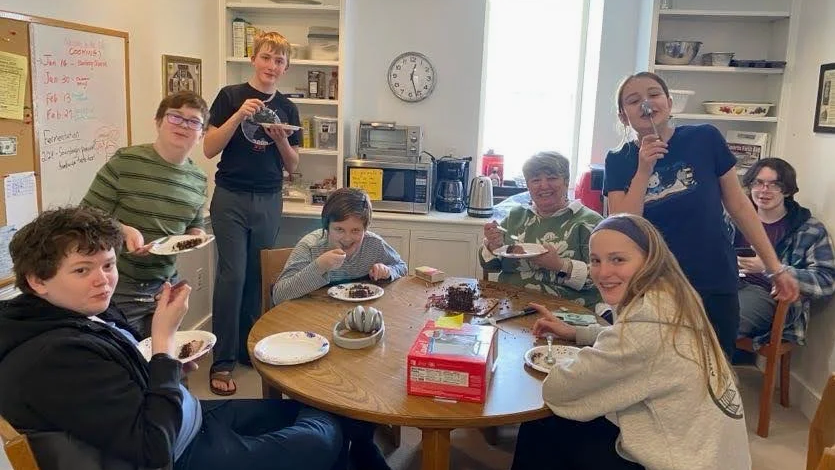
As the school year winds down, people often ask children what they’re looking forward to most about summer.
The assumption behind the question is simple: relief. Relief from schoolwork, schedules, pressure, expectations, early mornings, testing, social stress. Adults expect children to be counting down the days until freedom arrives.
At Embark Center, we encounter something different.
Many of our students are not excited for the transition into summer. Some are anxious about it. Some grieve it openly weeks in advance. Every year, we find ourselves helping young people emotionally prepare for the loss of a community that matters deeply to them.
That reality can be difficult for adults to understand because we are used to imagining educational spaces as places children need to escape from.
But Embark Center was never built around compulsion.
Young people here are not constantly being evaluated, ranked, corrected, managed, or pressured into artificial productivity. They are trusted with real autonomy. They move through projects because they are curious, not because they are complying. Relationships are not transactional. Time is not organized entirely around performance.
And so, unlike many traditional environments, our students do not experience Embark Center primarily as a source of pressure from which they need a break. For many of them, it is one of the few places where they can fully exhale.
That does not mean everything here is easy. Growth rarely is. But there is an enormous difference between challenge that emerges from genuine engagement and pressure imposed through coercion.
What many young people lose during the summer is not structure. It is belonging.
Adults often talk about the disappearance of “third spaces”, places outside of home and work where community can naturally form. Young people need these spaces too. During most of the year, Embark Center serves that role for many of our members: a place that is neither home nor school in the traditional sense, but something more voluntary, relational, and alive.
Summer reveals how rare those spaces actually are.
Many summer programs remain highly structured, highly supervised, and heavily adult-directed. Other spaces are organized around consumption: you can belong if you can pay. Many young people spend long stretches of summer isolated at home or moving between activities that leave little room for genuine community or self-directed exploration.
So as summer approaches, we do not simply celebrate the passing of another great year. We also help prepare our members for a real transition and a real loss.
There is something both heartbreaking and hopeful about this.
Heartbreaking because every young person deserves spaces where they feel known, trusted, and connected, and those spaces remain far too rare.
Hopeful because when children mourn the temporary loss of a learning environment, it tells us something important about what human-centered education can become.
Not a place children endure.
A place they miss.
