
Key Idea
We often treat childhood as preparation for “real life,” measuring its value by how efficiently it builds toward adulthood. But children are already part of the world, not waiting in a rehearsal space for something later. When we shift from positioning for the future to engaging with the present, even stretches that look like “doing nothing” — including play — take on new meaning.
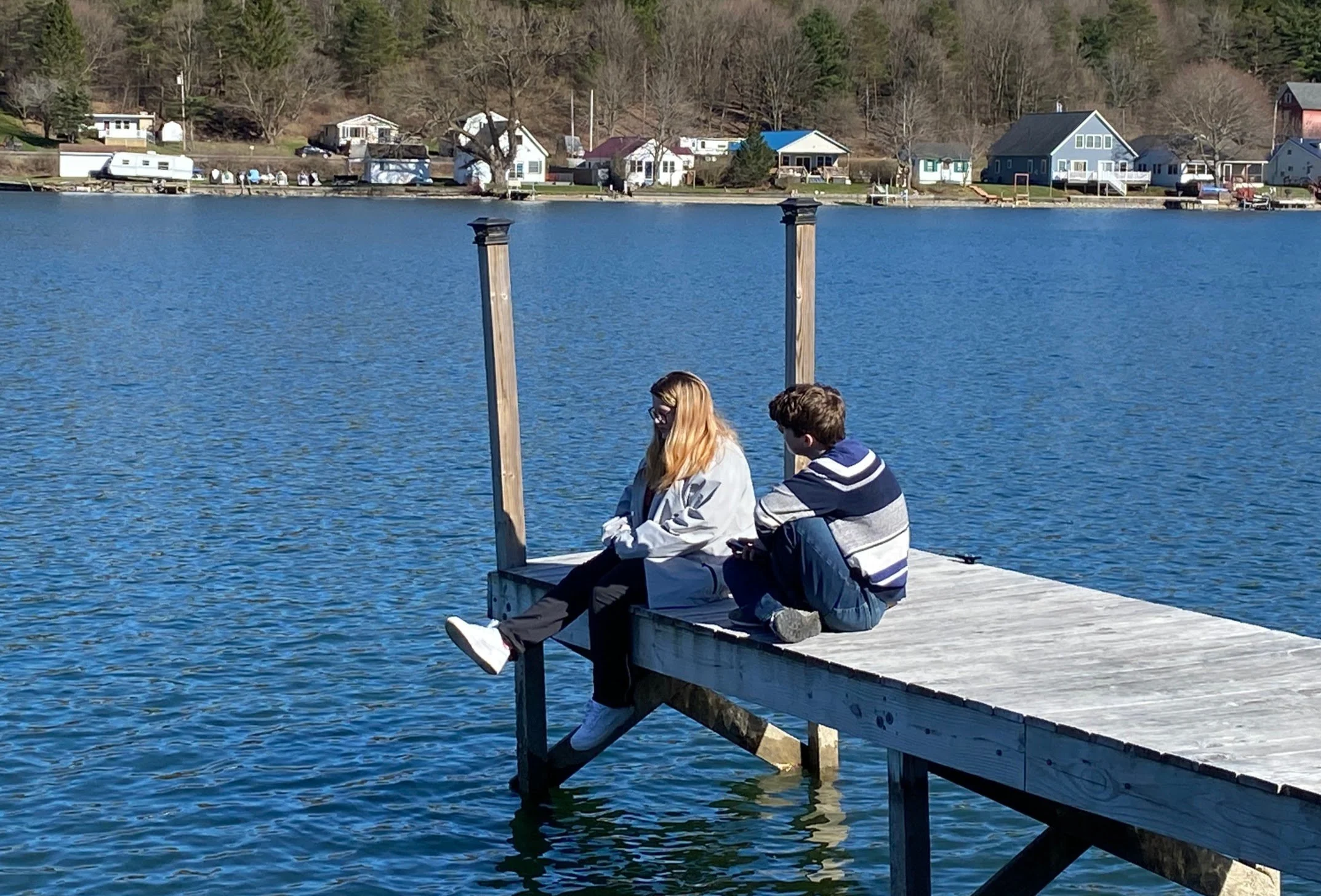
A child is sitting on the couch.
Not reading. Not building. Not talking. Just sitting.
Eventually someone asks, “What are you doing?”
They shrug. “Nothing.”
It’s a simple exchange, but the word carries weight.
Because in most of our cultural wiring, “nothing” isn’t neutral. It suggests wasted time. A lack of motivation. A missed opportunity. Something that should probably be corrected.
We’re used to equating visible activity with value. If effort isn’t obvious, if progress isn’t measurable, if something isn’t being produced, we assume nothing important is happening.
But that assumption rests on something deeper.
It rests on the idea that childhood is preparation.
Preparation for high school.
For college.
For a career.
For adulthood.
If childhood is a rehearsal for the real performance later, then of course “nothing” is a problem. Rehearsals are meant to be productive. Time is supposed to move you closer to opening night.
Under that model, every hour needs to justify itself against the future.
And that’s where the tension lives.
Preparation for What?
Let’s slow down for a moment.
Preparation for what, exactly?
Adulthood isn’t a single destination. It’s not a uniform stage everyone eventually steps onto. It’s a series of unfolding circumstances, relationships, responsibilities, and choices.
None of us prepare in abstraction.
We prepare in response.
We prepare because something matters to us.
Because we want to build something.
Because we want to understand something.
Because we care about doing something well.
Preparation grows out of engagement.
But when childhood is framed primarily as positioning — as moving toward an undefined but supposedly critical future — the present gets downgraded. It becomes instrumental. Valuable only insofar as it advances the next step.
Under that logic, a quiet afternoon on the couch looks irresponsible.
A deep dive into a video game looks like avoidance.
A season of drifting looks dangerous.
Because it doesn’t look like rehearsal.
But Childhood Is Not a Waiting Room
Children are not separate from the world, waiting to enter it later. They are already part of it.
They are navigating relationships.
Solving problems.
Managing frustration.
Testing boundaries.
Forming identity.
Making meaning.
They are living.
And sometimes living includes long stretches that don’t produce anything visible.
When a child says, “I’m doing nothing,” they may be thinking. Replaying a conversation. Imagining scenarios. Playing a game that looks repetitive from the outside but is rich with strategy, experimentation, or social connection. Letting their nervous system settle. Watching how others interact. Trying to figure out what they actually want to do when no one is directing them.
And here’s what makes this more complicated:
They often already know that those things don’t “count.”
By a surprisingly young age, many children have absorbed a hierarchy of value. Academic work counts. Structured effort counts. Visible progress counts.
Sitting. Reflecting. Drifting. Playing. Recovering.
Those are easier to dismiss.
So “nothing” can become shorthand for “nothing that matters.”
Play Doesn’t Disappear. We Just Stop Valuing It.
Play is often the first thing to be downgraded.
In young children, we celebrate it. In older children and teens, we grow suspicious of it. And in adults, we often abandon it entirely — or justify it only if it becomes productive.
But play doesn’t disappear with age. It just changes form.
Sometimes it looks like storytelling.
Sometimes like deep conversation.
Sometimes like experimenting with music or art.
Sometimes like building digital worlds, mastering a game, or competing online.
Gaming, especially, is easy to misunderstand. From the outside, it can look passive or repetitive. But internally, it often involves problem-solving, strategy, collaboration, persistence, risk-taking, and rapid feedback loops.
If we only recognize structured effort as valuable, we miss the developmental power of play — not just in children, but in ourselves.
And when play is dismissed as trivial, children learn to dismiss it too.
The Rehearsal Mindset Doesn’t End in Childhood
If we’re honest, adults live inside this framework as well.
We optimize.
We position.
We look busy.
We apologize for rest.
We describe our worth in terms of output.
Many adults quietly lose their sense of play altogether. Not because play stops mattering, but because we absorb the belief that our value depends on what we produce. Rest can feel indulgent. Play can feel irresponsible. If we are not contributing, building, earning, or achieving, we can begin to question our own worth.
We are always preparing for the next stage.
It’s easy to pass that posture on to children without meaning to.
But what if life isn’t a performance we’re warming up for?
What if it’s happening now?
So What About Readiness?
This is usually the unspoken question.
Yes, children are already living. Yes, the present matters. But don’t they still need to be ready for what comes next?
Of course they do.
But readiness is not built only through visible productivity.
It’s built through experience. Through navigating real situations. Through following interest long enough to encounter challenge. Through learning how to begin, how to persist, how to recover.
It’s also built through self-knowledge.
The ability to notice what matters to you.
To manage your own time.
To tolerate boredom.
To generate motivation rather than wait for it to be assigned.
Those capacities don’t always look busy.
Sometimes they look like “nothing.”
Sometimes they look like play.
Back to the Couch
So when a child is sitting on the couch, and someone asks, “What are you doing?” and they answer, “Nothing,” maybe that’s not a red flag.
Maybe it’s a sign that the moment doesn’t need to justify itself.
Maybe it’s a sign that not every stretch of time must be leveraged toward a distant goal.
Maybe it’s simply a child being part of their own life — not rehearsing for someone else’s idea of it.
Childhood is not a rehearsal for adulthood.
It is a real, consequential, meaningful season of being human.
And when we loosen our grip on the idea that every moment must prepare for something later, we may find that what looks like “nothing” — including play — is often where something quietly important is taking shape.
